

Earth Writing
Words without thoughts seldom to heaven go.

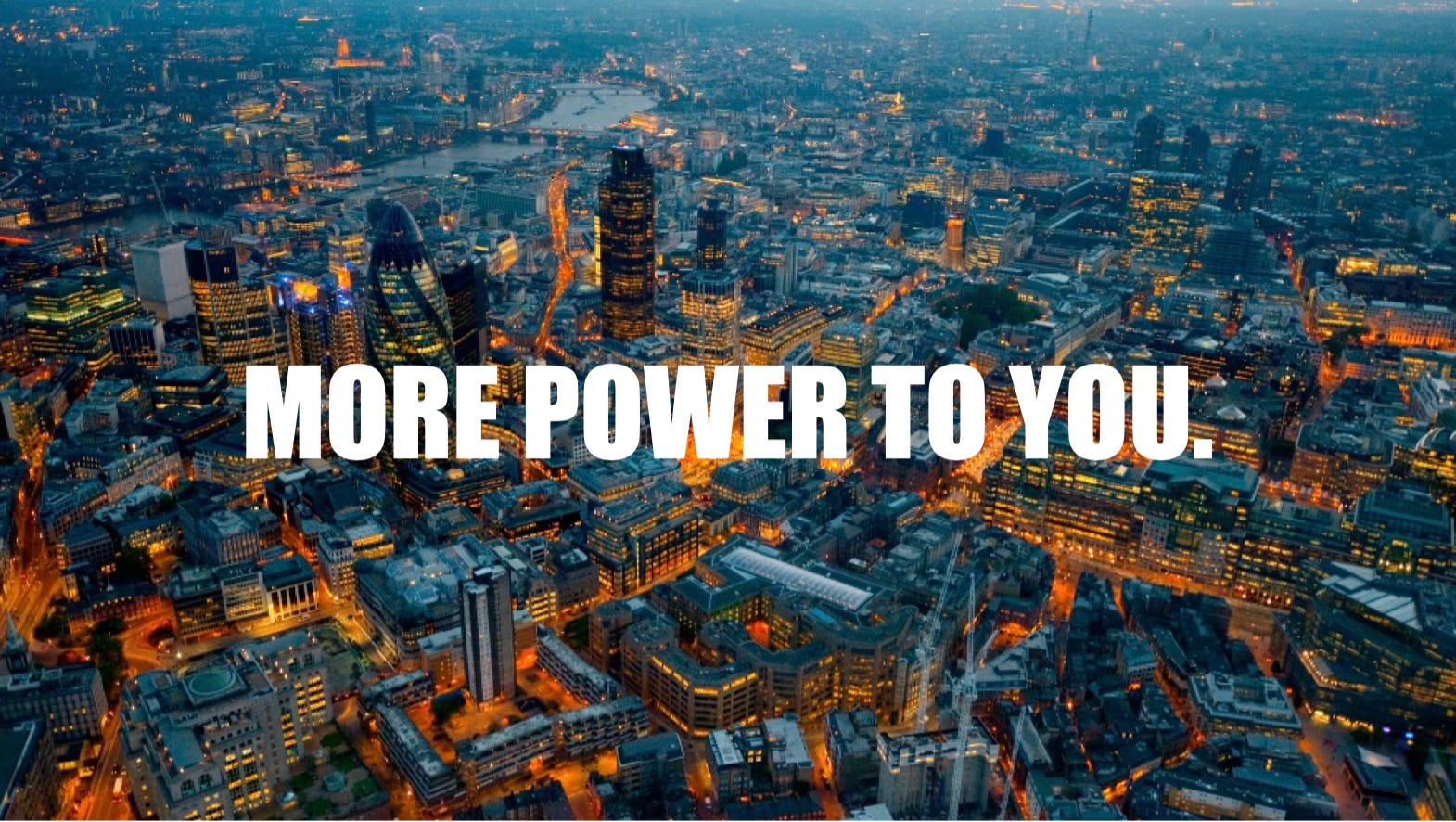
Some sentences burn into your brain. “The chief function of the city,” wrote the urban historian Lewis Mumford in 1961, “is to convert power into form, energy into culture, dead matter into the living symbols of art, and biological reproduction into social creativity.” Reading those words over 50 years later didn’t just make me want to live my life in a city – they made me want to give my life to cities: to be an active part of the giant transformative experiment that is urbanism, and a willing participant in humankind’s greatest effort to get along.
This sentence belongs to the canon of “earth writing” - a type of literature where place is not a backdrop, but a central subject - and I love it. In particular, I love earth writing that isn’t written by professional property people; David Foster Wallace describing Flushing Meadows during the US Open, a restaurant review that is more about a city than the food, a surprisingly good property listing, or Michel Foucault describing a garden. (Some of my favourites are going up on the fledgling Habits & Human Insta here)
The way places are written about influences the way we inhabit them. Good writing describes what might be liked or disliked, unique or mundane – it captures a hazy feeling rather than showing a physical reality. Thanks to writing we can establish a sense of place before we even get to it. We arrive informed but without knowing everything, which is a real sweet spot where we are curious and start looking for the things we care about, based on what we’ve read. If humans need to think more about habitats so that they take better care of places, earth writing seems like an important thing to be happening.
There was a time before writing when knowledge could only be shared verbally. This era was known as The Age of Oratory. If you hadn’t been to a place, you relied on the spoken word of another to understand it. The limit of the oral model is the need for a storyteller, which makes it impossible for knowledge to amplify quickly. It also requires the listener to imagine or think about the information on the storyteller’s rhythm and at their speed – their interests and emphasis would become yours.
The Age of Literacy began when written words replaced spoken words as the main transmission vector for knowledge. Writing meant that ideas could be trapped just once in a sentence and then read by countless other people – knowledge could scale. The psychological experience of learning also changed. Receivers of knowledge could now also grasp ideas in a different way. They could walk away with knowledge in books and sit by themselves to understand it on their own terms. Learning could now be a solitary rather than communal pursuit. No more needing to show the storyteller that you were listening. No more campfire-scale groupthink where opinions had to be shared. The Age of Literacy liberated you to hold your very own opinion, undiluted by others. As a result our knowledge didn’t just grow – it also diversified as individual and unpopular perspectives flourished.
The Age of Literacy is already coming to an end, and we don’t know what is next. Most information is consumed online as a mix of writing and imagery. Reading earth writing on the Internet is very different to reading it in print. Obviously, you can still read alone on a phone and form your own opinions, but that seems like an exceptional way to use the internet…. even then, there would be some consequential differences to an old-fashioned book. Online reading is tangly – whatever you are consuming is likely to:
Have arrived on your screen due to your history of online activity.
Incorporate imagery and or video amongst words.
Provide tools for you to publish your opinion of what you are reading.
Include a tail of comments from other readers that influences your opinion.
Be tuned to certain qualities that increase your willingness to share the information.
Incorporate or be adjacent to a transaction of some sort.
Already be popular relative to other information in the same category.
Earth writing has been changed by the internet and as a result, what we care about in the world has also changed. This is true of all types of earth writing, from reporting on city affairs in masthead newspapers that are driven by audience growth, to The Lonely Planet travel guide which is still printed and also available digitally. Arguably Airbnb is the greatest earth writing opportunity that ever existed. We could have thought deeply about where we lived and expressed something unique in 8 million listings, but instead we transposed our own homes to what was already popular, used the same words and the same flare camera filter – suddenly the Super Host who made money in micro trades and bought 10 properties in Bali became a tastemaker. Eugh.
I can’t really see how AI will make earth writing any better. LLMs make content easier to produce and publish, generally using an aggregate of facts and sentiments which is a recipe for bulk earth slop. We can only expect a loss of nuance and perspective that flattens our understanding of place. Get ready for earth writing that feels like you are listening to a friend tell you about their dreams… it’s just not interesting and it doesn’t move you.