

Psycho-geography
Move towards the light.

Psychogeography
Move towards the light.
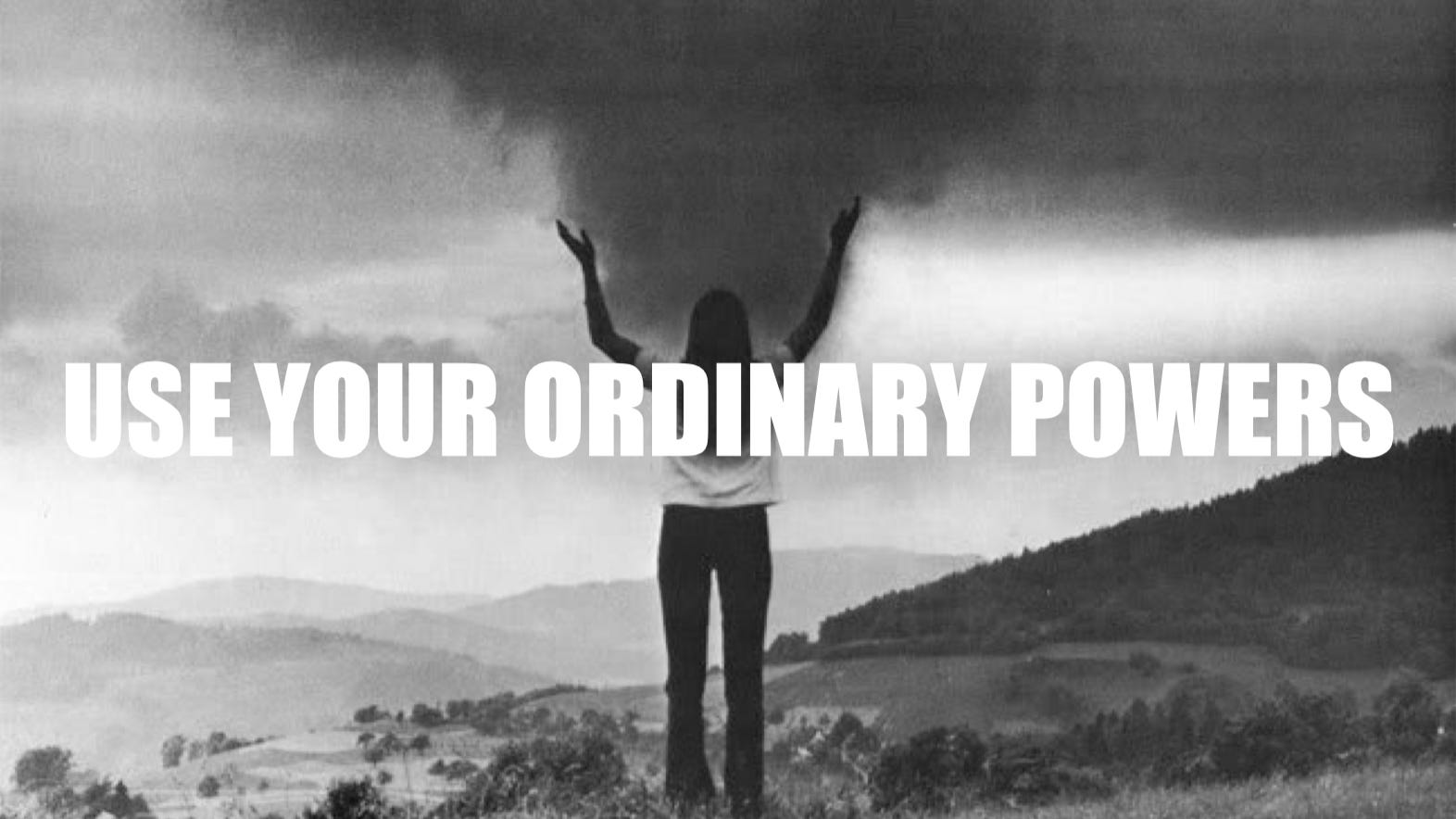
The future is not a place on a map that we are all going to. It is an idea that we have in our head about a time that has not yet arrived. We have plenty of ideas that only play lightly on our mind without materially changing how we go through the world, but ideas about the future are powerful. They work on us in a profound way because once we shape an idea about what the future can be, that idea begins to shape us. Our sense of the future directs our impulses and actions towards what we have imagined.
Habitats & Humans is about what it says on the tin – observations on the relationship between where we live and who we become as a result. I’ve always intended it to be some kind of psycho-geography, but the more I bang away, the more I’ve found myself drawn beyond the obvious sense of habitat as a physical place, and into the voodoo of habitat as an emotional place with its own living and shifting culture. Humans exist at a certain time, with a set of ideas, beliefs, values and behaviours that hang together quite consistently in a physical place. It is this broader notion of habitat that makes us who we are as people – what we believe in matters as much as what we live in and you can’t extract the physicality of the place from the mood of the place.
Humans are born pessimists. The cavemen who were most afraid were those that were most realistic about their situation in nature. They lived aware of their constant state of vulnerability, knowing that a ‘kill or be killed’ moment was never far away, and they passed this ever-present fear of what bad things might happen in the future onto their offspring as a kind of psychological adaptation with high survival value. Most modern humans will never be in a kill or be killed moment, but the hyper-anxious state we have inherited from our ancestors is hard-wired into our psyche, even to the point where we invent reasons to be fearful when there are none. There are entire industries that exploit this tendency.
Humans can’t stop worrying about the future and with a strong bias towards darkness and negativity. We think about it all the time and in many ways, from the subtle anxieties of composing tomorrow’s to-do lists to the existential dread of lying awake wondering whether AI will take our job. We talk about it at a global scale: wars, climate change, cost of living. We talk about it at a community and personal level: a million types of trauma, our identity, depression rates, inclusivity, how unfair it is that our parents made more money than we will… a list of topics as long as a Leonard Cohen song.
It used to be that only old people would be pessimistic which makes sense because they don’t have long to live, but over the last decade the kids have jumped in too. We now have a broad cultural pessimism where legitimate reasons to feel anxious are blended with a negative style of the times. The language and cultural codes of pre-apocalyptic nihilism run from our tweens to our geriatrics. Pessimism pervades publishing from mainstream newsfeeds to Real Review, it defines coolsy fashion and the chat on Social, just as it does the chat around Retirement Living community games room.
Pessimism, and its bedfellow depression, is an inability to construct a positive future. It is a kind of darkness that prevents us from imagining a place and time where we want to go. Like any culture it is contagious and grows on itself. Where you put your attention in this context really matters because good things are happening too.
Darkness is nothing more than the absence of light. If you want to do something with darkness you have to do something with light. You can put the light on and there is no darkness – you can turn the light off and the darkness returns. This mystic observation feels like a good strategy for the times to me. A broadly applicable strategy for any place and its culture where there is always darkness and light, but your sense is skewed towards the dark. We do still have some measure of control over where we put our attention. Even amongst all the really bad and culturally affected negative things we are forced to wade into; a human can at least remain open to the possibility of the positive happening. Most of us can still bring a kind of personal light into whatever darkness we move through.
Source Material
Quote: “An untroubled mind is the greatest source of inspiration”, Blinky Palermo, read on a trip to Dia Beacon, circa 2016
Sacred Cycles, Peter Lazonby, Fort Romeau Mix, 2020
The Future is Unwritten, The Joe Strummer Documentary, 2007
In conversation with The Future Laboratory for their 21st birthday, 2020
The Examined Life, Stephen Grosz, 2013
Darkness is the best canvas