

Something Old, Something New
The meaning of My Grandfather's Axe

Technically speaking, a parable is a story told by Jesus to teach a spiritual or moral lesson. The parable of My Grandfather’s Axe isn’t religious, but it is about the spirit of a place and I think there is a moral in it. Jesus is not involved.
The parable goes something like this: At a certain point in adulthood, your father hands down your grandfather’s axe to you. It was given to him by his father decades ago, and it has always worked well to do what was needed. Through history, the only two parts of the axe (blade and shaft) have been replaced many times over, which means that your grandfather never touched the tool that is now in your hands… but it is still somehow your grandfather’s axe.
Embarrassingly, it took me a long time to appreciate the difference between history and heritage. History explains the past (what happened?) and heritage expresses what we value from the past (what does it mean?). In new developments and public spaces you can find a lot of paving stones engraved with statements about the past. This reduces habitats and humans to a historical factoid that is pretending to be a heritage interpretation. My suspicion is that like me, a lot of developers and people in government need to sharpen up on the difference between history and heritage.
The goal of heritage projects is usually to make them fit for some kind of modern purpose by understanding and working with what the building means to people. Or, if we want to look at it through a less romantic lens: heritage buildings usually cost a lot to buy because people already know and love them. Then they cost a lot to adapt because there are physical elements you can’t tinker with, and the old way things were built isn’t compatible with new construction techniques or materials. Heritage officers are also often real pains in the ass in wonderfully rich world of ass pain that we call urbanism. The extra cost of working with a heritage building only stacks up when the cultural capital that the developer has paid overs for is leveraged into strong economic capital created through imaginative new uses.
I often draw on the parable of my grandfather’s axe when working in places with heritage significance. Using the story as the loosest possible guide to what an old building can become, helped steer Paramount House into being one of Sydney’s most loved heritage buildings. Built in the 1930s its was solely occupied by Paramount Pictures, one of Hollywood’s greatest film companies, who used it as a private screening room, administration services and storing celluloid films. We helped the building owner turn it into a café, offices and co-working space, a boutique hotel, sound-recording studio, bakery, Pilates studio, restaurant, public cinema and bar. Only one of the rooms in the entire place os doing roughly what is used to do in 1935 (to screen film) but the building is still Paramount House, and I am not just talking about its name – I am also talking about the spirit of the building as a wellspring of entertainment, pre-internet globalism and cultural obsession with Hollywood elegance.
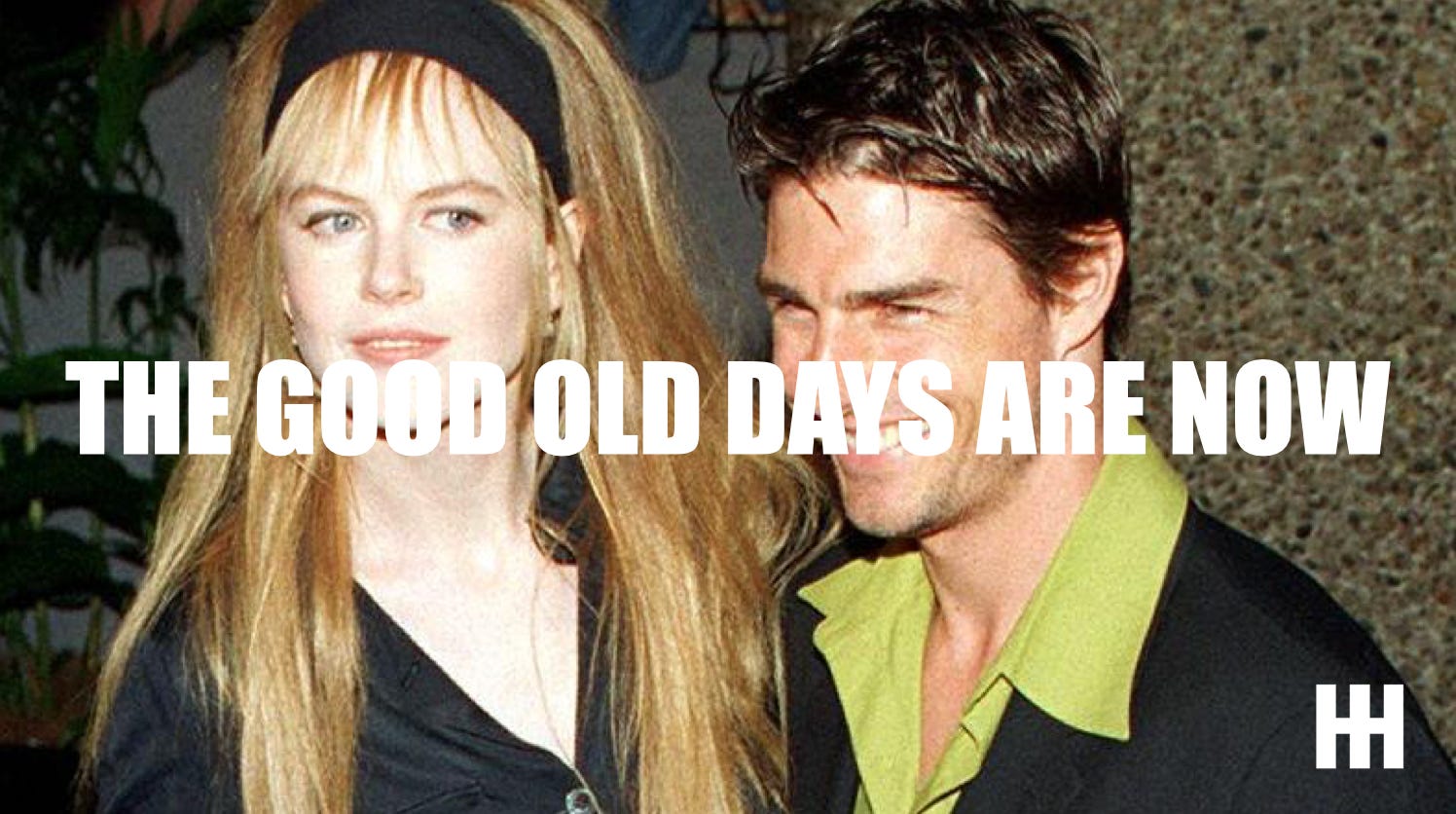
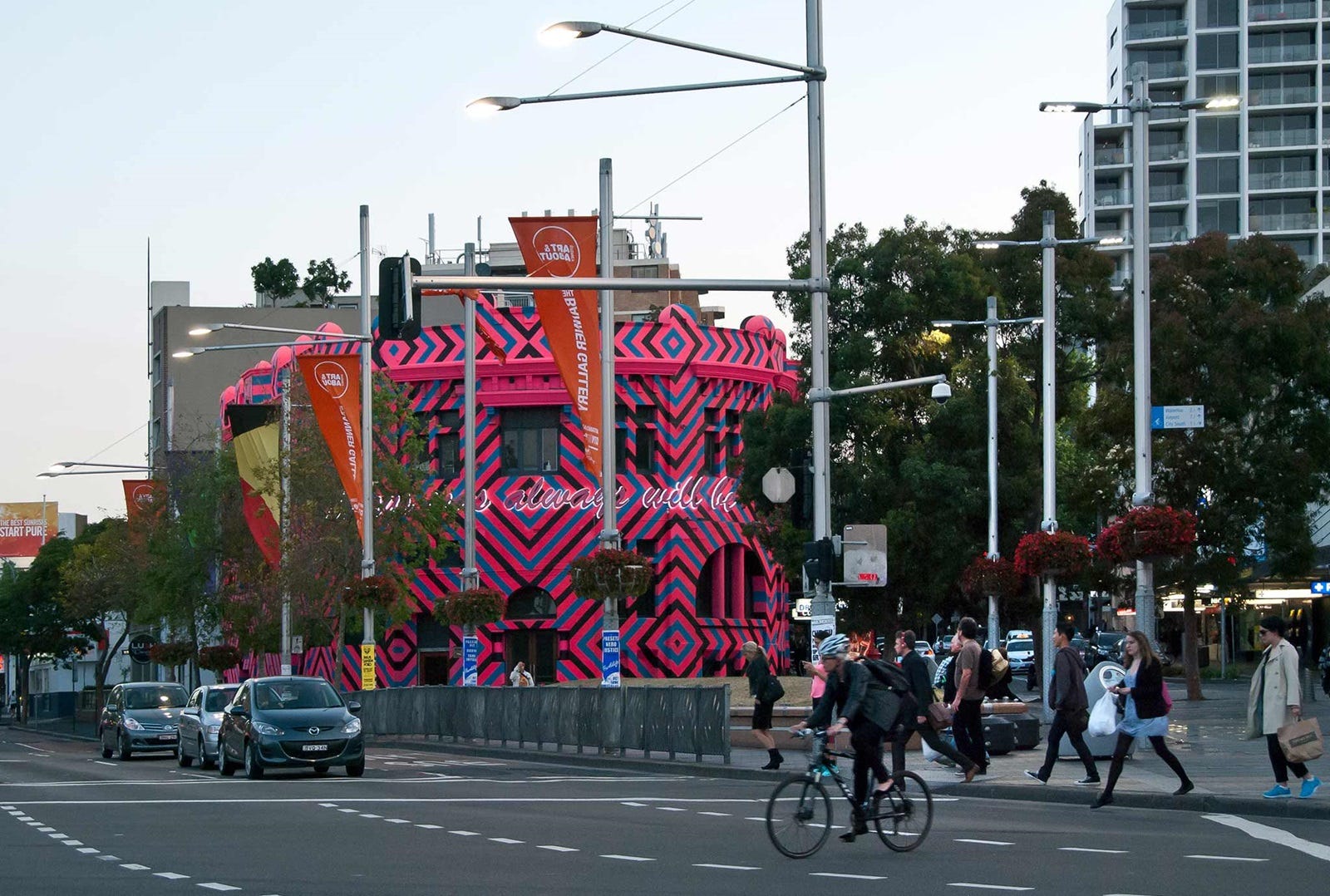
I am now working on two more projects in that require similar channelling of the past and reinterpretation for the future. One is an old building that was a bank, it turned into a nightclub that perpetually smelled of amyl and then became a visual cultural icon thanks to artist Reko Rennie before fading to grey. The other is a cinema site that Nicle Kidman opened in a flurry while Tom Cruise waited outside in the car because she was very hungry and wanted to go to dinner quickly. There is no way traditional cinema can survive on this street anymore because the land is too expensive, and so we need to work with the owner and architect to find ways to keep film alive through clever design and business modelling.
I could end this essay talking about the ‘privilege’ of working on such significant buildings but that seems all a bit LinkedIn. It is often torture. My Grandfather’s Axe is a cute story that holds a heavy burden: The idea that while on your watch, the ‘axe’ must be as useful as ever and should be handed to your child (the next generation) in good condition. Then there is the eco-emotional profile of the owner who often buys the building because they love it – not because they know what they know what to do with it. And, of course, you have relations with the surrounding community for whom the building means something – you can get lucky and have positive neighbours, but often this form of community interest translates to ‘don’t touch our dear building’ and a deep suspicion that whatever happens will be bad.
I am a city guy, so it makes sense to finish with a proverb from Manhattan, rather than some rural tree-chopping. It is said that there is no such thing as a bad old building and no such thing as a good new building. The Grandfather’s Axe parable is about having both new and old. That by understanding the difference between history and heritage we can build new lives for old buildings by carrying through what is precious.
Onya Barrie.